
Blog
Acne Scar Treatment in Bali: Which Option Is Right for Your Scars?

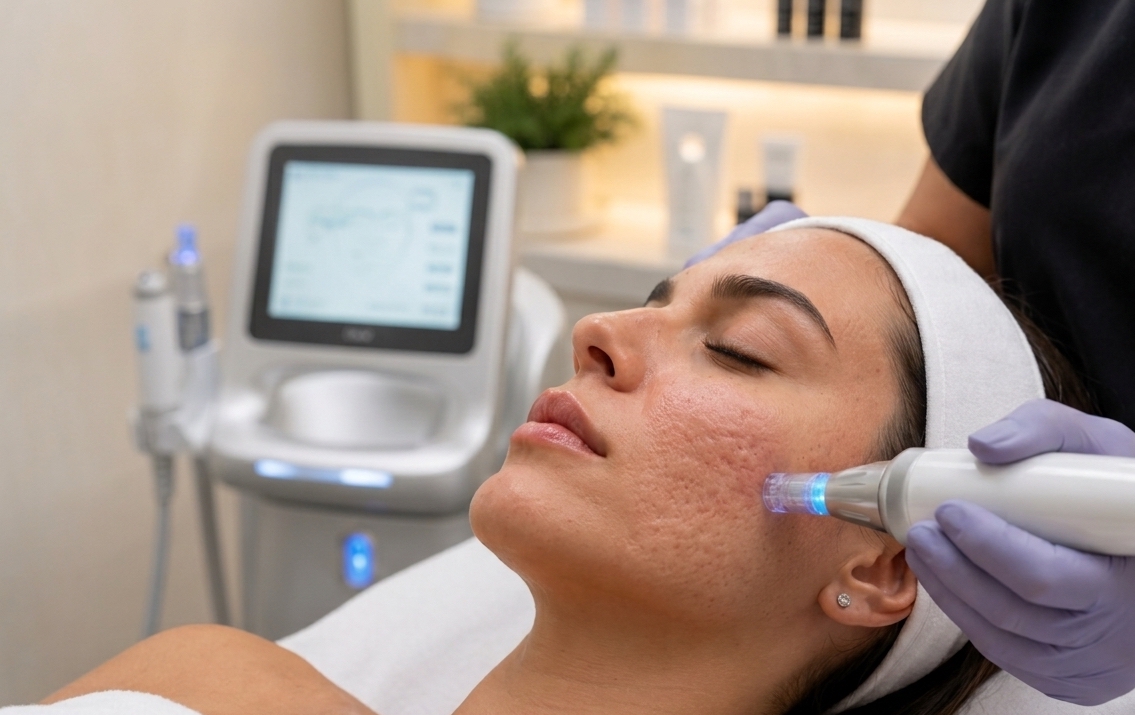
Acne scar treatment is one of the most searched aesthetic topics in Bali — and one of the most confusing. The confusion is understandable: “acne scar” is a broad term that actually describes several completely different types of skin changes, each with its own cause and its own appropriate treatment. A treatment that works well for one scar type can be completely ineffective — or even counterproductive — for another.
This guide maps every major acne scar type to the treatments that are actually suited to address it, so you can walk into a consultation at MOII Aesthetic Clinic with a clear understanding of what your skin needs — not a general request for “acne scar treatment” that could mean anything.
Understanding Acne Scars: They Are Not All the Same
Before any treatment is relevant, it helps to know exactly what you’re dealing with. Dermatologists classify acne scarring into distinct categories, and a trained practitioner will assess which type you have before recommending anything.
Post-Inflammatory Hyperpigmentation (PIH)
Flat, dark or red marks left behind after a pimple has healed. Technically not true scarring — the skin’s surface texture is intact — but the melanin response from inflammation leaves discoloration that can persist for months or years without treatment. Extremely common and often misidentified as “scars” when the skin structure itself is unaffected.
Post-Inflammatory Erythema (PIE)
Flat pink or red marks from broken capillaries following acne inflammation. More common in fair-skinned individuals. Like PIH, these are not structural scars — but they can be persistent.
Atrophic Scars (the most common true acne scarring)
These involve actual tissue loss — the skin surface is depressed below the surrounding skin. There are three subtypes:
- Ice pick scars — Deep, narrow, V-shaped indentations. The most difficult type to treat because they extend deep into the dermis.
- Boxcar scars — Broad, flat-bottomed depressions with sharp vertical edges. Can be shallow or deep.
- Rolling scars — Broad, wave-like depressions caused by fibrous tissue bands tethering the skin surface to deeper tissue. Create an uneven, undulating texture.
Hypertrophic and Keloid Scars
Raised scars resulting from excess collagen production during healing. More common on the body (chest, back, shoulders) than the face, and more prevalent in darker skin tones. Require a completely different treatment approach to atrophic scarring.
Treatment Options at MOII — Matched to Scar Type
For PIH and PIE (Flat Discoloration)
Chemical Peeling (NeoStrata / Dermaceutic) Professional peeling treatments using AHAs, BHAs, or combinations to accelerate cell turnover and fade pigmentation. Highly effective for PIH and early PIE. Available in light, medium, and advanced formulations depending on the depth of pigmentation.
Power C+ Package Facial A Vitamin C-based facial that delivers antioxidant brightening actives to support melanin regulation and fade post-inflammatory marks. Best for mild to moderate PIH in clients who want active treatment with no downtime.
PDT (Photo Dynamic Therapy) LED wavelengths specifically calibrated to reduce redness and support healing. Particularly effective for PIE — the red/pink marks from broken capillaries that can persist after breakouts. Often used as an add-on to other treatments.
Microneedling + Brightening Serums Microneedling creates micro-channels that significantly improve the absorption and effectiveness of brightening serums applied during treatment, making it useful for PIH alongside its other benefits.
For Atrophic Scars (Indentations — Ice Pick, Boxcar, Rolling)
RF Microneedling — ENDYMED INTENSIF The most clinically effective non-invasive treatment for atrophic acne scars. The INTENSIF handpiece on MOII’s ENDYMED PRO system delivers radiofrequency energy precisely through microneedles into the dermis — stimulating significant collagen remodeling at exactly the depth where atrophic scars exist. Particularly effective for boxcar and rolling scars. A series of 3–6 sessions is typically recommended.
Microneedling + PRP T-Lab Microneedling creates controlled micro-channels; PRP (Platelet-Rich Plasma) applied simultaneously delivers concentrated growth factors into those channels, accelerating the healing response and collagen formation. An effective combination for mild to moderate atrophic scarring, with less downtime than RF microneedling.
Subcision A specialized technique for rolling scars specifically. A fine needle is inserted beneath the scar and moved laterally to physically break the fibrous bands that are tethering the skin surface downward. Once these bands are released, the skin can rise to meet the surrounding surface. Often combined with filler or PRP in the same session for additional lifting. One of the most targeted and effective options for rolling scars that don’t respond adequately to surface treatments.
Dermal Filler (for isolated deep scars) For individual deep boxcar or rolling scars, a small amount of soft HA filler placed directly beneath the scar can provide mechanical lifting and improve the visible depression. Not a permanent solution (filler dissolves over time) but can provide dramatic improvement in specific isolated areas.
Chemical Peeling — Medium to Advanced For shallow atrophic scars, medium-depth chemical peeling can improve scar depth by stimulating collagen in the upper dermis. More effective for boxcar scars than ice pick or deep rolling scars.
For Ice Pick Scars
Ice pick scars are the most challenging type to treat because of their depth and narrow opening. Surface-level treatments are largely ineffective.
RF Microneedling (ENDYMED INTENSIF) is the strongest non-surgical option for ice pick scars, as it reaches the required depth to stimulate remodeling in the deep dermis. Multiple sessions are needed, and expectations should be for significant improvement rather than complete elimination.
For Raised Scars (Hypertrophic / Keloid)
Keloid / Hypertrophic Scar Injection Corticosteroid injections (triamcinolone) placed directly into raised scar tissue to suppress excess collagen production, flatten the scar, and reduce redness. For hypertrophic scars, this is often the first-line treatment. For keloids, a series of injections is typically required and should be managed as an ongoing treatment plan. Available at MOII following clinical assessment.
What Realistically Changes — and What Doesn’t
Acne scar treatment is one area of aesthetic medicine where managing expectations genuinely matters. The honest position:
- PIH and PIE respond very well to treatment and can be largely resolved with an appropriate course of peeling, brightening facials, and LED therapy.
- Shallow atrophic scars (mild boxcar and rolling) respond well to RF microneedling and/or microneedling + PRP, with visible improvement over a series of sessions.
- Deep atrophic scars can be significantly improved — meaning less visible, less deep, smoother texture — but complete elimination is rarely achievable with non-surgical treatment alone.
- Keloids are chronic conditions that require ongoing management rather than one-time treatment.
The most important thing is an accurate assessment of your scar type and realistic expectations for each option before committing to a treatment course.
Acne Scar Treatment at MOII Aesthetic Clinic, Bali
MOII offers a full range of acne scar treatments — from brightening facials and professional peeling through to RF microneedling, PRP, subcision, and scar injections. Every treatment plan begins with a skin assessment that identifies exactly which scar types you’re dealing with and maps the most appropriate sequence of treatments for your specific case.
For Bali residents and long-stay visitors, we build treatment programs designed around consistent progress over several months — because the most significant improvements in acne scarring are achieved through a planned course of treatment, not a single session.
Book your acne scar consultation at MOII Aesthetic Clinic Bali today.